
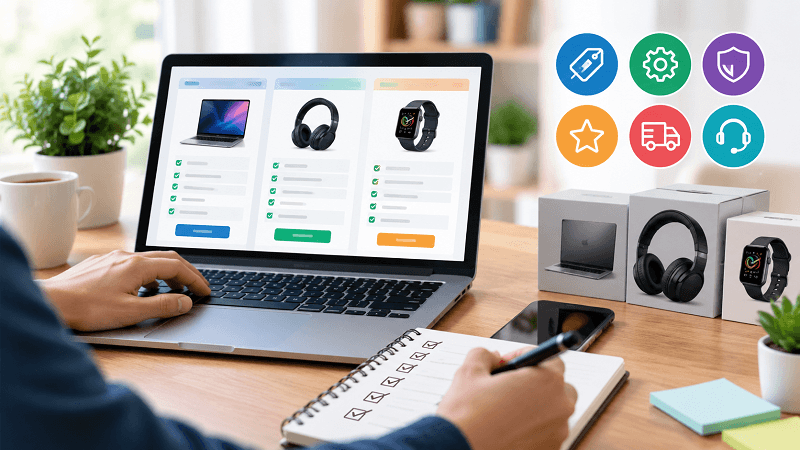
Making the right buying decision can be challenging when countless products, brands, and services are available online. Every option promises something different, from better performance and advanced features to lower prices and improved durability. Without proper research, it is easy to spend money on something that does not meet your expectations.
Comparing available options before making a purchase helps you understand their differences, identify genuine value, and avoid unnecessary expenses. Whether you are shopping for home appliances, electronics, furniture, software, or everyday essentials, a structured comparison can make the process easier.
At LivingPristine, our goal is to help readers understand important product differences and make informed decisions. This guide explains how to compare products effectively, evaluate specifications, understand pricing, assess reliability, and select an option that suits your needs.
Why Product Comparisons Matter
Product comparisons provide a clearer understanding of what different options offer. Instead of relying on advertisements or choosing the first item you discover, you can evaluate products according to practical requirements.
For example, two washing machines might have similar prices but differ in energy consumption, washing capacity, maintenance requirements, and warranty coverage. A lower-priced model may initially appear attractive, but another option could provide better long-term value.
Comparing products helps you:
- Understand the differences between competing options.
- Identify features that genuinely matter to you.
- Avoid paying extra for unnecessary functions.
- Evaluate quality, reliability, and expected performance.
- Discover potential disadvantages before purchasing.
- Make decisions based on evidence rather than advertising.
The purpose of a comparison is not always to identify one universally superior product. Instead, it is to determine which option offers the best combination of features, quality, affordability, and convenience for a particular buyer.
Step 1: Identify Your Needs and Priorities
Before researching individual products, establish exactly what you need. Without clear priorities, you may become distracted by specifications and features that have little practical value.
Start by asking yourself a few questions:
What problem am I trying to solve?
Identify the primary purpose of your purchase. Someone buying a laptop for office documents and browsing will have different requirements from someone editing professional videos or playing demanding games.
What is my available budget?
Determine a realistic spending limit before exploring available options. Include possible delivery fees, accessories, installation expenses, and future maintenance.
Which features are essential?
Separate necessary requirements from optional extras. For example, battery life and portability might be essential when choosing a laptop for travel, while a premium display may be less important.
How frequently will I use the product?
Products used every day may justify a greater initial investment if they provide improved durability, convenience, or efficiency.
Creating a short list of priorities gives your research a clear direction and makes it easier to eliminate unsuitable choices.
Step 2: Research Different Products and Brands
Once you understand your requirements, identify several products that meet them. Comparing a small selection of suitable options is usually more productive than researching every available model.
Start with official manufacturer websites to understand product specifications, available configurations, compatibility, and warranty information. Retailer websites can help you check current prices, availability, and included accessories.
Independent reviews provide another useful perspective. They may explain how products perform during everyday use, identify limitations, and highlight differences that manufacturers do not emphasize.
When researching brands, consider their reputation, customer support, repair options, and availability of replacement parts. A product can have impressive specifications but still be inconvenient to own if repairs are expensive or support is difficult to access.
The comparisons livingpristine approach should focus on collecting useful information from multiple sources rather than relying on a single product description or recommendation.
Remember that different sources serve different purposes. Manufacturer specifications establish what a product offers, independent testing helps assess performance, and customer experiences can reveal recurring ownership concerns.
Step 3: Compare Important Features and Specifications
Specifications help you understand the technical differences between products. However, the most important measurements depend on the product category and how you intend to use the item.
For electronics, consider processing power, memory, storage capacity, display quality, connectivity, and battery performance. For household appliances, energy efficiency, capacity, noise levels, maintenance, and operating costs may deserve greater attention.
Furniture requires a different approach. Dimensions, materials, weight capacity, construction quality, comfort, and cleaning requirements can be more important than decorative features.
Use the following table as a starting point:
| Comparison factor | What to check |
|---|---|
| Performance | Does the product perform its intended task effectively? |
| Build quality | Are the materials and construction suitable for regular use? |
| Ease of use | Is it simple to operate, install, and maintain? |
| Compatibility | Will it work with your existing equipment or environment? |
| Durability | Is there credible evidence of reliable long-term performance? |
| Efficiency | How much energy, time, or other resources does it require? |
| Warranty | What protection is provided, and what exclusions apply? |
| Price | What is the complete cost of purchasing and owning it? |
Avoid assuming that a higher specification automatically means a better experience. A more powerful device may be unnecessary for basic tasks, while a larger appliance may consume more space and energy than your household requires.
Focus on the differences that directly affect your needs.
Step 4: Evaluate Price and Overall Value
Price is an important consideration, but it should not be the only factor determining your purchase.
A cheaper product may offer excellent value when it meets your requirements and provides dependable performance. However, a low initial price can become less attractive when the product requires expensive accessories, frequent repairs, or costly replacement parts.
Similarly, a premium product is not automatically worth the additional investment. Its extra features must provide benefits that justify the difference in price.
To evaluate value fairly, calculate the expected total cost of ownership. Include the purchase price, delivery, installation, consumables, subscriptions, maintenance, and other predictable expenses.
For example, imagine two products with different purchase prices:
- Product A costs £180 and requires approximately £60 in additional expenses over three years.
- Product B costs £220 and requires approximately £25 in additional expenses over the same period.
Product A would cost approximately £240, while Product B would cost approximately £245. Although Product A has the lower initial price, the difference in overall cost is small.
You would then need to consider performance, reliability, and other features to determine which product offers better value.
These figures are illustrative. Actual costs depend on the product, usage, and market conditions.
Step 5: Read Customer Reviews Carefully
Customer reviews can reveal practical information that is difficult to identify from specifications alone. Buyers may describe installation difficulties, recurring faults, disappointing battery life, uncomfortable designs, or helpful customer support.
However, not every review is reliable. Some comments may reflect unusual experiences, outdated product versions, or expectations that do not match the intended purpose of the item.
Instead of focusing exclusively on average star ratings, look for recurring patterns across multiple reviews and independent sources.
Pay attention to:
- Repeated complaints about the same problem.
- Feedback from people with similar requirements.
- Reports about long-term performance.
- Comments regarding maintenance and repair costs.
- Experiences involving returns and warranty claims.
- Differences between professional testing and everyday use.
A single negative review should not necessarily disqualify a product. Likewise, a large number of positive ratings does not guarantee that an item will meet your specific requirements.
For additional confidence, investigate whether reviews describe actual use, explain the testing process, and identify any sponsored or incentivized recommendations.
Step 6: Check Warranty, Returns, and Customer Support
The buying process does not end when you pay for a product. Warranty protection, return policies, and customer service can significantly affect your ownership experience.
Before purchasing, check how long the warranty lasts and which components or problems it covers. Some warranties exclude consumable parts, accidental damage, or specific types of wear.
Read the return policy carefully. Confirm the return period, eligibility conditions, shipping responsibilities, and whether restocking charges apply.
Customer support is equally important. Find out whether the manufacturer or seller offers accessible assistance, repair services, replacement parts, and clear instructions for reporting problems.
When purchasing online, verify the seller’s identity and reputation. Compare the complete purchase terms rather than selecting a retailer solely because it advertises the lowest price.
Keep receipts, order confirmations, warranty documents, and relevant product information. These records may be useful if a problem develops later.
Step 7: Create a Side-by-Side Comparison Table
Once you have collected enough information, organize it in a simple table. This makes important differences easier to identify and reduces the risk of forgetting details while switching between product pages.
For example:
| Criteria | Product A | Product B | Product C |
|---|---|---|---|
| Purchase price | £180 | £220 | £200 |
| Essential features | Meets needs | Meets needs | Missing one requirement |
| Maintenance | Moderate | Low | Moderate |
| Warranty | 1 year | 2 years | 1 year |
| Main advantage | Lower price | Easier maintenance | Additional features |
| Main concern | Higher upkeep | Higher initial cost | Missing requirement |
This example uses hypothetical products and is intended to demonstrate the comparison process.
Your table should reflect the factors that matter most to you. If you are comparing smartphones, camera quality and software support may be important. If you are choosing a refrigerator, storage capacity and energy consumption may deserve more attention.
Avoid adding too many criteria. A comparison becomes less useful when minor details obscure the differences that actually influence the decision.
Common Mistakes to Avoid When Comparing Products
Even careful buyers can make mistakes when researching competing products. Recognizing these problems can help you make better decisions.
Choosing the cheapest option automatically: Low prices are attractive, but they do not guarantee good value. Consider quality, reliability, and ongoing expenses.
Paying for features you will never use: Advanced functions can increase costs without improving your everyday experience. Prioritize features that solve real problems.
Ignoring product versions: Two products with similar names may have different specifications, accessories, or warranty conditions. Confirm the exact model before comparing prices.
Trusting a single review: One person’s experience may not represent typical performance. Look for consistent findings across credible sources.
Overlooking compatibility: A product may be excellent on its own but unsuitable for your existing devices, available space, or intended application.
Ignoring long-term costs: Maintenance, replacement parts, energy consumption, and subscriptions can affect affordability over time.
Researching indefinitely: More information is not always better. Once you have evaluated your essential requirements and understood the meaningful trade-offs, you can make a practical decision.
How LivingPristine Helps Readers Make Better Decisions
LivingPristine aims to make product research more straightforward by presenting information in an accessible, organized, and useful format. Our content is designed to help readers explore available options without becoming overwhelmed by technical language or unnecessary details.
Through comparisons livingpristine, readers can develop a more structured approach to evaluating products, understanding their advantages, and recognizing their limitations.
Our broader content approach includes buying guides, product comparisons, informative updates, and news covering relevant developments. These resources can help readers understand changing markets, discover alternative options, and research purchases more confidently.
When evaluating recommendations, readers should consider the criteria behind each conclusion. A useful comparison explains why one option may suit a particular buyer, where another option performs better, and which limitations deserve attention.
The objective is to support informed decision-making rather than suggest that one product is the right choice for everyone.
Final Checklist Before Making a Purchase
Before placing an order, review the following checklist:
- Have I identified my essential requirements?
- Do the products I am comparing serve the same purpose?
- Have I checked the exact model and specifications?
- Have I compared prices across reputable sellers?
- Have I reviewed credible customer feedback?
- Have I considered maintenance and other ongoing expenses?
- Have I checked the warranty and return conditions?
- Does the product fit my budget and intended use?
- Have I considered the main disadvantages of my preferred option?
If you can answer these questions confidently, you are better prepared to make a purchase that suits your circumstances.
Conclusion
Making smarter purchasing decisions requires more than comparing prices or choosing the product with the most impressive specifications. It involves understanding your needs, researching alternatives, assessing quality, reading reviews, and considering the complete cost of ownership.
A structured comparison helps you identify meaningful differences and avoid spending money on features that offer little practical benefit. It also encourages you to evaluate reliability, compatibility, warranty protection, and customer support before committing to a purchase.
LivingPristine is committed to helping readers navigate these decisions through accessible information, practical buying guides, and useful comparisons. By following the methods explained in this guide, you can approach future purchases with greater confidence and choose products that provide genuine value for your needs.
Ultimately, the best buying decision is one that balances affordability, quality, functionality, and long-term usefulness. Take the time to compare your options carefully, verify important details, and select the product that makes the most sense for you.